
On process and processing
And paperbacks, too.

Lately, I’ve been thinking about how what worked once may not work again.
Earlier in the month, I shared a little bit about my writing process for a short episode of What’s Your Process—a new venture dreamt up by two of my favourite people. For the past few weeks, they’ve been running around Toronto and New York talking to everyone from professional dog trainers (of Westminster ilk) to costume designers (for Heated Rivalry) to novelists (moi!) about the intricacies of their process.
Our forty-minute interview (the professional way of saying your friends asking you questions in your office) had to fit into a digestible <2 minute video, so the evolution of my process was not captured in full, but what the conversation brought up for me was just how much my writing process has changed over the years. How what had worked for my first novel was not what worked for the second. How what had not worked for the second did for the third. How each new experience, it seems, comes with its own secret instruction manual. Some tricks are repeatable, (to date, I’ve found that maintaining a daily word goal as always been helpful) while the efficacy of others seemingly dissolve overnight (I used to think writers who wrote in silence were mad, now I can’t imagine listening to a thing. This coming from the girl who wrote The Afterpains with this song on a loop for up to four hours a day.)
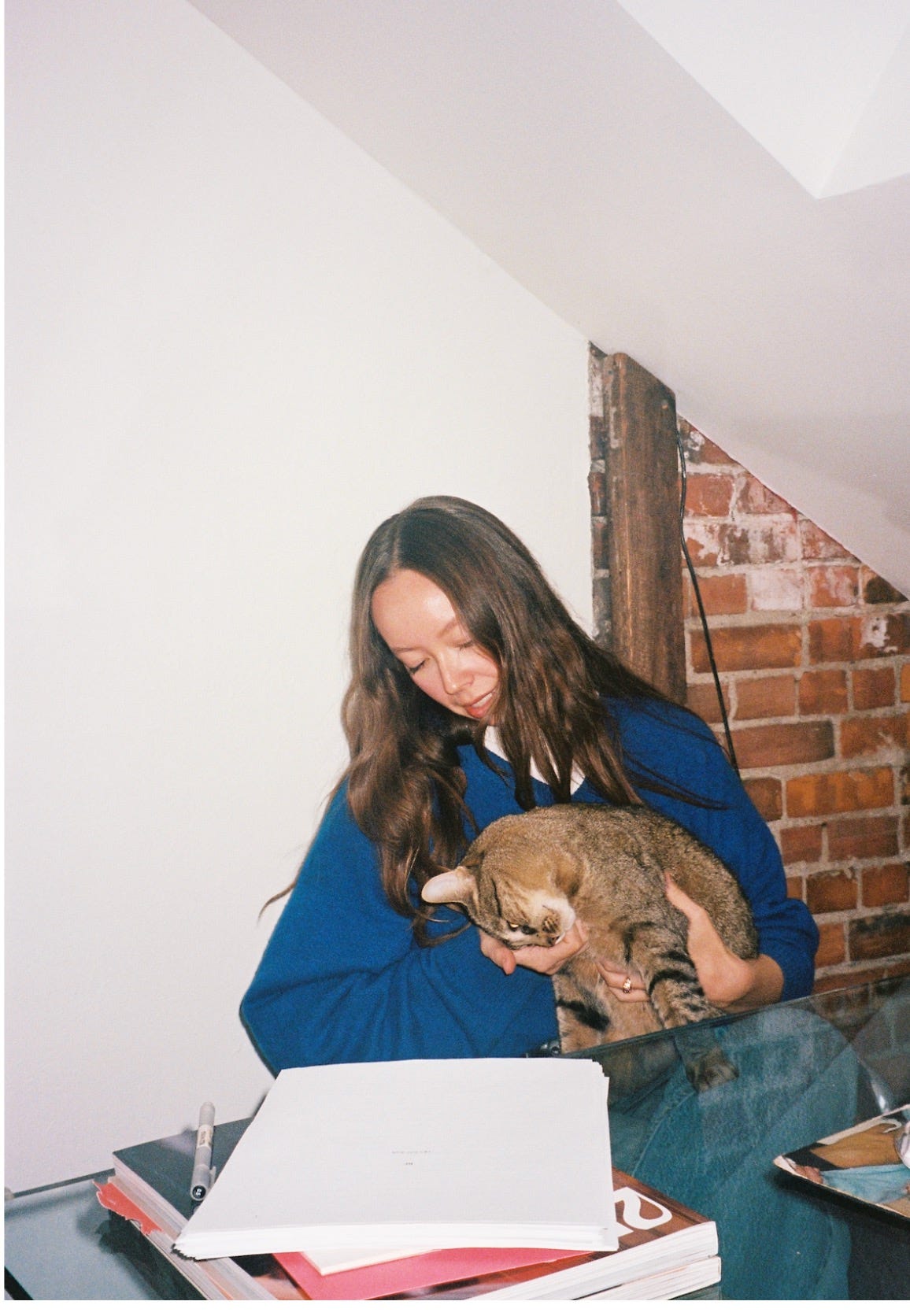
Photo via What’s Your Process
A few days before the episode came out, I received confirmation that the paperback edition of The Afterpains was available for pre-order. It got a new cover treatment for its summer release, and although the aesthetics are similar, it really does feel new. This kind of second lease on life is a gift to all authors, but as a newer one on the shelves, I could not be more grateful to have been given another shot at reaching new readers. With a more accessible price tag, it’s one I hope is wide reaching.
The fact that the hardcover has been out for two years is a strange one to process—it amplifies my distance from its writing, but also, how?!—but as I started to think about how we’d be talking about this new release, old ways once again seemed irrelevant. What worked then to usher it into the world was different than what would frame its new format. Pitching it as the debut of a new voice is no longer material. The story is no longer that it is a new story, but the same one, re-entering at a different point in time.
When I sold the novel, Roe v. Wade had not yet been overturned. When I submitted the final manuscript, there were no headlines about ICE in the news—though there were others about separation policy that made their way into narrative. A lot has changed in two years. More than ever, it feels like humanizing stories of immigration—no matter the way—are needed. Stories about abortion are needed. Stories about women choosing their own paths are needed. Empathy is a muscle, that like all muscles, can atrophy—and reading, the immersion into another’s experience, is an exercise worth prescribing.
Now that I work in the world of libraries, I am more attuned than ever to the power of books. Today is the last day of Freedom to Read Week, a week to think about intellectual freedom, read banned and challenged books, to consider the power of what we read and our responsibility to uphold such a precious right.
Today is also my dad’s birthday (somewhat, he was a leap year baby so technically, he’s as stuck in time as he ever will be, still 70, or still 17), and I’m finding peace in the symmetry. He was the person who first instilled in me a love of reading. Ever since we were little, he always encouraged my brother and I to read widely. To try books of different genres and eras and authors. I’ll always remember him encouraging a (short-lived) stories of Bible obsession despite his fervent atheism. I don’t know that I would be a writer if I had not first fallen in love with books and the places they took me.
As I approached today (those who have lost anyone know the lead up is often the most emotional), I thought back on what his first birthday without him was like. How I’d gone to Paris for work, and processed it through movement and challenge. How the next year, I learned to see grief as a gift.
This year I am sitting with it. The needs are different three years in, even if the pit of the pain is unchanged.
I am writing this weekend, shuttered in the country with the band that Marcus plays in, a makeshift creative retreat. I am surrounded by snow and curled up in the bedroom while my friends make music right outside it.
Later, I will join them and we might share ideas about what we made. What the process was like. Candles will be blown out, cake eaten, a toast or two. And tomorrow we’ll start over anew.
This is beautifully reflective — especially the idea that process evolves with the season of life.
I was struck by the line about how what once felt essential can quietly become irrelevant. Many of us cling to old rituals because they once worked, not because they still do.
The reminder that immersion, slowness, and even re-reading can reshape how we think — not just what we produce — feels important.
Perhaps process isn’t something we “find” once, but something we renegotiate as we change.
Thank you for articulating that shift so gently.
What a wonderful reflection on process and how what worked once might not work again.. except maybe sticking to that word count;) and you are so right to consider exploring the cultural/political context that your paperback has arrived into... the themes are so ripe for thinking about how to "re-present" your beautiful book to the world. Loved your WTP spot ;)